Instinct is using Exa for web search

Crockett Ford
sunbeam Research
2 min read

sunbeam was the first to break this story.
When you ask Instinct to read a web page, what actually happens?
To find out, sunbeam Research gave Instinct URLs for nonexistent pages on a website we administer. Since the requests were for fake pages and the timing matched our conversation with Instinct, the requests couldn’t plausibly have come from anything else. In total, it made about 12 requests over an hour and a half. We checked Cloudflare analytics and the server’s raw request logs to get the full picture.
A few things stood out:
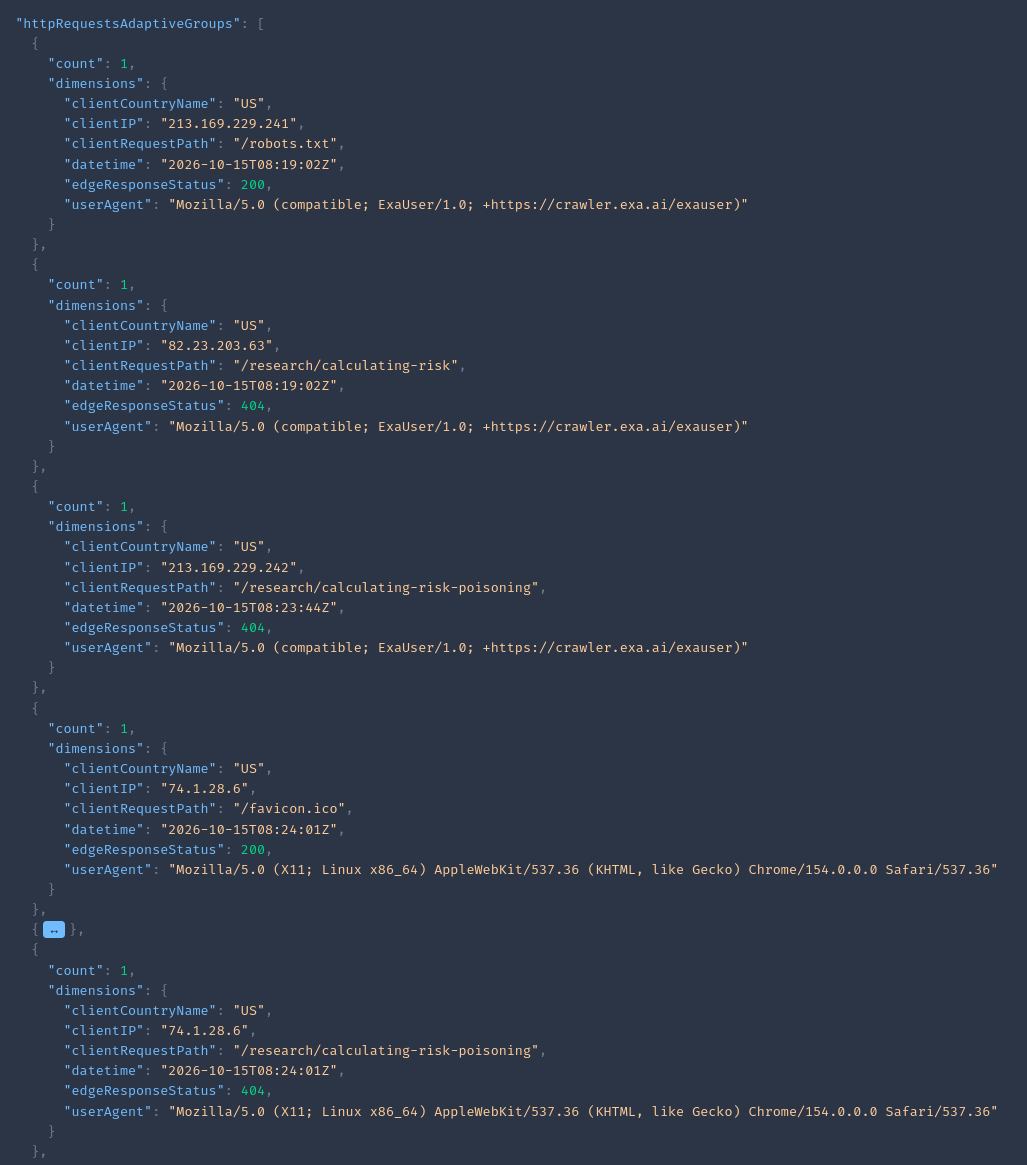
- Instinct used Exa to fetch pages. Every direct fetch arrived with the user agent
Mozilla/5.0 (compatible; ExaUser/1.0; +https://crawler.exa.ai/exauser), from a different IP each time. - Exa signs its requests (Web Bot Auth,
Signature-Agent: "https://crawler.exa.ai"). But nothing in the requests identifies Instinct. They are indistinguishable from those of any other product built on Exa. - In one test, after the fetch returned a 404, Instinct loaded the page in its browser without being asked.
- Instinct’s browser had no self-identifying features. It looked like standard Chrome on desktop Linux from a residential IP address, with no bot user agent or signature.
We directly asked it to use the browser in two other tests. All three browser visits came from the same residential IP over about 80 minutes. The browser kept its cache between visits, consistent with a persistent browser behind a residential proxy. We can’t say whether that IP is stable over longer periods or shared with other users, so it’s not a reliable way to identify Instinct.
This presents unique challenges for marketers hoping to track Instinct traffic to their site. Unlike ChatGPT, Claude, or Meta, Instinct doesn’t send its own user agent or signature. Its fetches look like generic Exa traffic, and its browser visits look like a normal user’s.
All of this means you can’t track, allow, or block Instinct specifically.
The only reason we could link these requests to Instinct was that we controlled the URLs and the timing. For normal traffic, you don’t have those luxuries.